As anyone who reads this blog knows, I'm incessantly paying attention to news stories and giving my opinions. If I had my way, blogging would be my vocation, but sadly it doesn't pay well, especially when you're a crackpot leftist talking mostly about economics. I'd have a better shot if I were reviewing music, talking about fine cuisine, or documenting myself through an important life change. But I digress: those who have the great pleasure of hearing me rant in person know that there are numerous items that I didn't even manage to post about, often issues that I'm deeply fascinated by. I'd like to pay to pay tribute to several stories that I, unfortunately, didn't have a chance to properly address from 2012.
The theme that I stumbled upon while trying to figure out what to ultimately write about is pretty significant, in my mind: violence. 2012 was full of it, from talk in the election of killing Osama bin Laden to riots during Black Friday sales to the nationalist rallying of the Euro Cup. Violence, as well as the horrifying discourses around it, was seen on a daily basis this year. Here are my thoughts.
This spring was a tumultuous one for Québec, where students were embroiled in a powerful strike movement unlike anything anyone's ever experienced in North America. Hundreds of thousands of students and sympathisers took to the streets daily in order to fight against the government's decision to raise tuition for students in Québec. The province has a strong welfare state, something that clashes rather significantly with the rest of Canada and the United States, and large media organisations such as Maclean's, CTV, and SunMedia were quick to label the protesters as lazy and entitled, and this was an attitude largely echoed by the anglophone general public. Perhaps most emblematic of this was the fatal shooting that occurred the night of the election in September. But protesters were acting out not only against specific changes, as miners were in South Africa this summer, but austerity in general. This is echoed by the turmoil that Greece has experienced of late. Regardless of whether or not the movement was justified, it was full of violence.
Much has been made of the violent acts of protesters, namely lighting a police car on fire and throwing a smoke bomb in the metro. These images are shocking and confirm what people want to see, that people who are standing up to the system are playing dirty tricks and deserve to be crushed. Naturally, the police brutality against the protesters has gone largely undetected - at least in the mainstream media. The internet, local community radio, and to a lesser degree CBC have been effective tools of circulating discourses and information from the perspective of the students. On all sides, violence is a tool, and each party involved has discourses about the appropriate use of violence, meaning that it's a complicated topic and that it is inherently very political.
Perhaps more shocking still is the violence in the Middle East, embodied in two very different yet eerily similar struggles: Syria and Gaza. Both of these conflicts are incredibly complicated and have generated massive controversy internationally. I've attempted to steer away from them, but I wanted to offer a brief summary and then talk about violence specifically.
In Syria there has been a longstanding conflict between the state and some of its people. Depending on whom you ask, you'll get a different name for the event: an uprising, a struggle, a crackdown, or a civil war. All the same, the world has had its eye on Syria since the start of the so-called Arab Spring in early 2011. While many parts of the Middle East had revolutions that overturned the status quo, Syria managed to entangle itself in a longstanding showdown between President Bashar al-Assad and many factions of the Syrian public. While both sides have sustained heavy casualties to this date, it is hapless civilians that tend to make up the largest contingent of the body count. Missiles, airstrikes, and firefights in urban locales have all contributed to a staggering loss of life. Again, the military and the rebels feel justified in their employment of violence, and they have both been backed politically and financially by players in the international community. The state, with its monopoly on the use of violence continues to fight against a large plurality of Syrians who believe that violence is necessary to produce social and political change. The conflict will continue for the foreseeable future as neither side is capable of defeating the other and both have widespread support from powerful partners.
The conflict this year between Isreal and Palestine was also dramatic. For several months the two states, which are perennially at war, engaged in sporadic clashes. Parts of Occupied Palestine have limited recourse for the abuses that they face at the hands of Israeli Security Forces. As has been the recent trend, groups within Gaza have fired rockets into Israel. Palestinian's are desperate, and placards like this one have attempted to sum up the injustices.: "You take my water, burn my olive trees, destroy my house, take my job,
steal my land, imprison my father, kill my mother, bombard my country,
starve us all, humiliate us all, but I am to blame: I shot a rocket back". The history is obviously very complicated, but the reality is that there is a massive power imbalance between Israel and Palestine. During peacetime Palestinians are forced to deal with violent acts being perpetrated against them, like having possessions stolen, or their rights taken away, also including economics as a form of violence.
Another terrible theme of 2012 that I feel needs to be addressed is the unbelievable amount of deaths from shootings in the United States. There are four that stand out: Chicago in August, Wisconsin in August, Aurora in July, and Connecticut in December. These events are remarkable for the fact that they were all examples of disgruntled and disturbed young white men who wrought violence on a group of surprised unarmed people. There has been a lot of talk about gun control, something which Americans have some interesting perspectives on, but strangely there has been limited discussion about other key elements. First of all, access to mental health services is lacking, and most Americans are keen to blame violent video games rather than systemic problems of dealing with depression, anxiety, or mental illness. Nonetheless, these psychological elements are certainly noted, but what's troubling from my perspective is that a wider sociological analysis is never really presented. It's much safer, from the public's perspective, to think of there being a small number of "defective" people out there rather than have to respond to the fact that violence occurs for very predictable social reasons, notably that we encourage men to express no negative emotions other than anger, we construct guns as the ultimate example of power (such as masculinity, whiteness, or whatever else), and our individualist society fails people who are not good at forming or maintaining interpersonal relationships. This is obviously amplified when we consider that the public mental health infrastructure in the United States is seriously lacking. All the talk of violence in public places is tragic enough, but many in America are seriously entertaining the idea of fighting fire with fire: the solution to the violence problem is to get more people carrying guns, presumably to stop other violent people. Simple solutions, like legislation or hiring security guards, are being favoured over smarter, more complicated, longterm solutions like reeducation.
Lastly, I'd like to talk about rape culture and the apparent divide between East and West. Recently, a woman was raped by several men in India, her lifeless body thrown off a bus. Media outlets in the West have taken this opportunity to point out that life is very dangerous for women in India. In addition, numerous statistics about the number of women raped in the country have been splashed across television screens. Approximately 22 000 women are reported to have been raped per year in India, though rape statistics are almost always problematic as they are usually vastly under-reported. Definitions of rape are not very clear, and there's a substantial threat to one's personal safety when a victim comes forward. The problem, however, is that India is four times the size of the United States, is the equivalent of 5 000 women per year being raped in the United States. People in the West have a general sense that discrimination based on sex is over, misogyny no longer exists, and that we are over rape. This is further warped by stereotyped notions that people in the developing world are uncivilised, especially with respect to how women are treated. The case is thus: rape is a problem in India but not in the United States. The hypocrisy is simply astounding to me for numerous reasons, especially given the gender gap in the 2012 Presidential Election. America has a serious problem with rape culture, and although it's worse than in the rest of West, it's a problem that exists dually in both developed and developing countries across all social and economic classes.
All in all, 2012 was a very violent year, though it may not be remembered that way, unfortunately. In Googling the top news stories of 2012, I came across numerous lists, though almost all of them included the following: Costa Concordia Incident, Stratosphere Jump, Presidential Election, Facebook's Initial Public Offering, Hurricane Sandy, the London Olympics and many other events. With that in mind, I will say that Global News had by far the best list of top news stories from 2012. They did not shy away from talking about numerous other cases, which you can look back on by following the above link.

Is This Progress? This Is Progress.
Monday, 31 December 2012


Tuesday, 18 December 2012
Tis The Season
This post may be coming late given that Christmas is less than a week away, but I'd like to take a moment to make a brief post about gift-giving this year. I've seen a lot of campaigns going around on social media, encouraging people to buy certain products and to shop at certain stores. There are several principles that are important in consumption, and I'd like to articulate them here alongside some practical advice.
First, all of the responsible ways to shop have been effectively co-opted by the retail industry. Public relations departments and firms, though something called "corporate social responsibility", have taken the path of least resistance to make either minimal change or change in name only to create the appearance that the product or service is more ethical than it indeed is. This is all purposefully designed to make us feel much less empty for immersing ourselves into consumer culture overdrive. It's virtually impossible to stay on top of this one, but it pays to be vigilant and do your best. There is no way to eliminate all the exploitation from your purchases, but that doesn't mean you should try.
Perhaps the most common recommendation from consumer watchdogs is "buying local". While this is certainly important, it's necessary to understand what exactly this means. Buying local can mean rather different things to different people, but the premise is generally to support your local economy. This is generally viewed as positive because there is minimal effect on the environment through transportation and players in the local economy are more active in terms of production, something which is increasingly being out-sourced - an entirely unsustainable practice.
As such, people will often shop at their local stores, foregoing Wal-Mart and Target. While this is presumably a good move, it's important to remember that it's not just the store - it's the product. Buying products made in China and Bangladesh at a local store only goes part way, for numerous reasons. The ecological cost of transportation is huge and the benefit to your local economy is going to be much smaller than buying something locally produced.
Another important angle is combating accumulation. It's no secret that the holiday season is full of excess, but why not keep that in check by buying gifts that people can actually use rather than getting them impractical stuff just because you feel compelled to get them something? The vast majority of North Americans have far more material possessions than they need already, so ask yourself if something actually needs what you are considering purchasing.
Most importantly, remember that it's the thought that really counts. Taking time out of your busy life to thank someone and show them that they are worth it is often all someone really needs. Instead of buying a gift for everyone, why not give your time? Spend time doing something you enjoy together or make them something that they could not have made themselves. Also, consider making a donation to charity in their name, or going to volunteer together. These are all more meaningful experiences than using your money to buy something and it will be guaranteed to be better than spending hours in a mall.
This should be a time of the year to relax and get away from the grind, though unfortunately it is rarely the case. I hope that your holidays are safe and enjoyable regardless of how you intend to gift for your loved ones. All the best!
Wednesday, 28 November 2012
Deconstructing the US Election
I have been really struggling for the past three weeks to break down the recent US Elections. After some significant thinking, I'm ready to write a very short blog about something that has been virtually forgotten since 7 November. The major issue I see is that there is just such a narrow gap between the Republicans and the Democrats, something that is traditionally talked about a fair amount during elections, though oddly not this time around.
These minor difference, in my opinion, are very much a product of the fact that the American political system is flooded with money. As a result, the two political parties are effectively corporate parties, representing, for the large part, the interest of business and the wealthy. The best example of this is that the working poor were never targeted as a group. Nor are the unemployed or youth, with the exception of "recent college graduates" who are about to enter the workforce for the first time.
Both the Democrats and the Republics are deeply entrenched in the policies of neoliberalism, and it's often difficult to look at an economic policy and see which party has introduced it. The Republicans may have bailed out corporate banks and insurance companies, but the Democrats bailed out auto manufacturers. The Republicans pushed for the further development of the offshore oil industry, and the Democrats have have articulated much of the same thing, looking to Canadian "ethical oil" to supplement American reserves. The disastrous 2010 British Petroleum incident has been largely forgotten. Moreover, both parties support free trade, both parties encourage direct foreign investment, and both parties argue that small business is the heart of American while making tax laws that favour larger corporations.
On matters of foreign policy there is a surprisingly similarity between the mainstream parties. Republicans and Democrats advocate for a military that can support America's economic interests. They are both keen to fight wars so long as the public will tolerate them. They are both committed to freeing Americans from terrorism. They have similar ideas about America's place in the world. Obama proudly declared that he took out Bin Laden, uses rocket attacks, and supports for Israel as a traditional ally.
The question, then, is why this corruption and narrowness comes from. There are numerous reasons, but I think that there are two that are salient.
Firstly, the system is simply terrible and the political culture is one of antagonism rather than co-operation. Having only two real parties to choose from creates a polarised attitude in Washington, even if there isn't much of substance to disagree about. The President and Congress also have to fight each other endlessly, wasting valuable time in lengthy disputes that often go nowhere except to further polarise the discourse. The Constitution was meant to protect the public from a dictatorial president, and thus there are numerous "checks and balances" in the system, all of which slow down the process of creating legislation. The status quo is thus favoured.
Secondly, there are significant financial barriers to participation in American politics. Corruption effectively keeps clean parties out, because they fail to have the economic wherewithal to enter. The average cost of running as a candidate is in the neighbourhood of about $1 million dollars for the House and $7 million for Senate. As such, for the most part members of the Senate, House of Representatives, and the President all tend to come from similar class backgrounds. Most are older white males who are professionals and wealthy. They are usually well-connected to power in their communities, either in business, law, religion, or community associations.
By this point you're probably listing off all the items that differentiate the parties. And of course, there are many, perhaps most importantly women's rights and same sex marriage. I certainly don't wish to diminish just how important these causes are. The reality of Obama's win is that the cost of healthcare for women will likely go down, they will have greater access to contraceptives, and the discourse on rape can be bettered. The reality of Obama's win is also that openly queer individuals can continue to serve in the American military and pressure will continue on the conservative "Defense of Marriage Act". These materialist differences should not be understated: they make measurable impacts on the lives of millions of Americans.
However, from a larger ideological angle, it's somewhat troubling that the entire election in the United States was based on these issues. First of all, these are broadly social issues, and secondly, they represent well-organised groups within society: women and homosexual men and women. I realise that I say this with the privilege of being a Canadian male where marriage equality is not a political issue. I hope to be challenged on this notion. Many other groups aren't effectively organised into lobbies, like youth, hispanics, sex workers, farmers, or the unemployed. These groups need change, and America needs to seriously examine issues that were missing from the election campaigns: promoting a real green energy strategy, handling crime better, restricting free trade, creating more progressive immigration policies, combating homelessness, ending ghettoisation, or reducing consumerism and debt.
So what are the prospects for REAL change? It's a tough question, but traditional discourses on revolution point to an important correlation. The more conservative a government is, the more likely progressive change can take place through people getting involved with grassroots organisations or even protesting the state and demanding structural change. Americans need to wake up to the realities around them. Regardless of the political stripes of their government, they are being oppressed by an alliance between government and industry in a corporate police state. Occupy was a great start, but it only focused on being critical rather than proposing a concrete solution. I'm excited to see what's next, but I know that it needs to come soon as America, and the rest of the world, can't sustain itself environmentally or economically.
Thursday, 22 November 2012
Thankfulness and Remembrance
This
weekend is American Thanksgiving. Much like in Canada, it’s a festival filled
with relaxing and spending time enjoying the company of loved ones. Beyond the
crazy travelling, the turkey, and the fall colours lies a terrible disregard
for what Thanksgiving is all about. Though thought to be based on several myths about
indigenous peoples helping European settlers, the holiday is an anniversary of
a great feast in Massachusetts. The strong currents of “Indian” culture are
still significant in celebrations, and I wish to briefly talk about this in my
short post today.
As earlier
mentioned, Thanksgiving is about giving thanks for a plentiful harvest. In
North America, this holiday celebrates the harvest season and the transition to
winter. Though documents about the “First Thanksgiving” are sketchy at best,
the holiday depicts a sense of harmony between the inhabitants of the so-calledOld and New Worlds. Artwork in the centuries since has focused on expressing
sentiments of goodwill and co-operation. While this may have been the case in
the seventeenth century, over successive centuries the relationship between
settlers and indigenous people turned into perhaps one of the gravest histories of genocide.

For the
most part, the nationbuilding efforts of American education and media have
largely omitted the incredible details of the shocking treatment of indigenous
groups in the United States. As the United States has become more cosmopolitan
it has struggled with various others. The construct of settler/native has been
replaced with white Americans as native and immigrants as new settlers. This is
very well summed up in the 1996 Simpsons episode about a fictitious“Proposition 24”.
In Canada,
we very often castigate Americans for their blatantly genocidal actions. There
is a greater awareness of the genocide here in Canada because there is no
American nationalist ideology that has to protect a certain historical
discourse. However, it’s often forgotten that our “Indians” have been treated
with similar hostility, and likewise the story has been largely covered up or
forgotten.
While in
the United States war, disease, and displacement were the primary weapons used
by the federal government, Canada employed a more benign-looking but equally
sinister system. Canada’s numerous native groups were broken apart by geography
and generation, with youth taken away to go to Residential Schools, formally
introduced in 1876 and operating, shockingly enough, until 1996. In order to
assimilate indigenous Canadians, the Catholic Church, Anglican Church, federal,
and provincial governments forcibly removed children from their communities
where they were sent to learn Western Christian tradition and learn to speak
English or French.
The damage
to hundreds of cultures was, and still is, totally overwhelming. The system,
paired with other attacks on indigenous cultures (such as creating reserves and introducing private property) created cycles of substance abuse, violence,
suicide, and other social ills. I witnessed first hand the devastation when I
worked on the Indian Residential Schools Settlement, a programme introduced by
the Federal Government in order to give reparations to survivors of the trauma.
I talked to people who were sexually abused, who had lost several loved ones to
suicide, and who had substance abuse problems. What these individuals all had
in common was that they were incredibly impoverished financially and
culturally, living in total dependency of government funds. It was
heartbreaking to witness, and I felt powerless knowing how structural and
pervasive these problems were. What’s more, I had studied history in my BA and
this was my first real look at the residential school system.
All this
said, we have forgotten what to be thankful for. I think it’s important that
people reflect during Thanksgiving that the great society we claim to have is
based on generations of exploitation and forgetfulness. Next Thanksgiving,
remember.
Wednesday, 31 October 2012
Québec's New Direction?
Tonight I had the chance to listen to the inaugural speech of Québec's new premier, Pauline Marois. I heard it while I was in transit to Ottawa from Montréal, and it got me reflecting on the realities of Québecois politics, and why I'm proud to be a new resident of the province.
Marois, the province's first female leader, was elected in September. The party won only four more seats than the incumbent Liberals, ending nearly a decade of Jean Charest's continuous rule. Numerous scandals of 2012, notably the Charbonneau Commission investigating corruption, and the Printemps d'Erable student strikes, contributed to the waning popularity of the conservative and federalist Parti Liberal du Québec (PLQ).
The Parti Québecois (PQ) was widely expected to win the election, and they managed to win a minority mandate. Parliament first sat yesterday, and the inaugural speech (the equivalent of the throne speech) was this afternoon. In her hour-long address, she articulated the four planks upon which the government will stand, which will be explained below.
First, Marois committed her government to move toward eliminating corruption. She specified that corruption "not a Québec phenomenon", and that there needs to be a greater emphasis on getting money out of politics, evoking Réné Levesque as an inspiration. Montreal is currently at the centre of a massive corruption scandal, but it's important that the reach of money into politics is a significant problem in many other jurisdictions such as Ontario (with e-health and Ornge) and the United States (with its Super PACs).
Second, the PQ will focus on building the economy. Where the previous government introduced neoliberal reform in order to produce growth, the PQ is investing in making sure that economic activity is incremental, environmentally sustainable, and that it benefits the province as a whole. Potential reforms to taxes and financial regulations were hinted at, but the major thrust is investing in local economies rather than pursuing large international trade deals.
Third, the government wants to foster a better sense of solidarity. This is to be achieved in numerous ways, most notably through the expansion and defense of Québec's large social welfare state. Marois specifically discussed expanding access to the existing universal daycare programme, bettering school environments, offering in-home care, and hiring more physicians. These measures are designed to make sure that all generations of Québecers are being taken care of, and that everyone can participate in society. This was paired with a very strong rhetoric on the liberation of women, achieved by allowing the state to further encroach into the domestic sphere for care of children and the elderly.
Fourth, the PQ will continue to protect Québec's language identity. Obviously this is by far the most controversial item, but it is a solid principle nonetheless. Talk of separation was left out in favour of discussing the importance of fostering a strong Québec based around the French language as the tie that binds.
All told, there are some significant problems with Marois' speech. For one, it is entirely unclear how she intends to actually finance these proposed changes. The expansion of the social welfare state is indeed an excellent idea, but on a practical level, there was no indication from the premier about changes to income taxes, for example. Moreover, Marois was certainly playing politics regarding the anti-corruption plank. This was the policy position taken by the Coalition Avenir Québec, and now that there is a commission pointing out just how involved senior politicians in the province were, Marois is capitalising on the disdain coming from ordinary residents.
But with that in mind, Québec's political direction is one that I feel pretty proud of and that I can certainly support. Marois hit on some very important issues from my perspective, namely: resisting cultural hegemony through protection of the French language, propping up the social welfare state, emphasising the idea that all Québecers are important to the future of the province, and supporting green initiatives in order to protect the natural beauty of Québec.
Monday, 15 October 2012
Québec Summit on Co-operatives
Last week I spent four days at a once-in-a-lifetime conference, the 2012 Québec Summit on Co-operatives. The meeting attracted nearly three thousand attendees from over ninety countries. The Québec Summit was the first meeting of its kind, a gathering of the world's leading co-operatives, fleshed out with academics, activists, members of NGOs, and co-op federations and associations.
The meeting was truly a marvel. It showcased the unity of a somewhat disparate movement, demonstrating that it was very possible for co-ops to compete with business enterprises in the global economy. The atmosphere was charged, fueled by several high profile guests such as Québec Premier Pauline Marois, performer Gregory Charles, and alter-globalist Riccardo Petrella. While the experience was moving because of its sheer size, there are several aspects that jump out at me as concerns, which is the subject of this post.
The most auspicious in question was the role of Desjardins. Desjardins is a financial co-operative, a federation of caisses populaires, in Québec which has expanded outside that market. It is the largest co-operatively owned financial institution in North America, and it is also the largest financial institution in Québec, with 45 000 employees and roughly 80 per cent of Québec residents holding at least one account. Desjardins is an excellent enterprise with a serious focus on providing services that people need. It consistently ranks highly in terms of social responsibility projects, and it plays a key role in supporting the growth of the co-op sector. Of course the size of Desjardins speaks to the capability of co-operatively run businesses to become players in free market economies, but the issue is that Desjardins is virtually unchallenged in terms of its size and scope.
For this being one of two official ICA events in the International Year of the Co-operative, there was a sense that Desjardins itself had a disproportionately large stamp on it- perhaps explained by the fact that it was responsible for ensuring the success of the event, financially, logistically and in every other way. Still, it would have helped enormously to have the Summit at least somewhat more participatory. Desjardins had 75 full-time staff organising the conference, with tasks varying from the logistical such as finding sponsors and designing logos to the substantive such as picking speakers. It is also a significant concern that the CEO suggested that Québec hold a second summit of this kind, organised and supervised by Desjardins again - however, I have since heard that she has backed down on this claim. While I am certainly glad that Desjardins was able to pool resources in order to put this event on, I am troubled by large institutions leading a movement without keeping close to democratic principles or the realities on the ground. Desjardins absolutely should continue to support summits and congresses, but it would be far more preferable that it come to to table as an equal player with other members of the co-op world.
This co-optation was very much reinforced by the use of several studies that were commissioned to showcase co-ops. Firms such as McKinsey and IPSOS were contracted to legitimise research that would be palatable to people outside the world of co-operatives. These organisations polled various groups in order to determine where the co-op sector was successful and where it was not. The information, in a lot of regards, was very helpful, notably that many people just don't know what a co-operative is, and that the best way to remedy this would be to state this more clearly. However, the sleek packaging of these reports was designed not just to present some useful data, but the medium is the message. Data from a respected, international, mainstream, and "objective" firm is designed to help co-operatives fit better into the existing economic status quo, rather than work to change it by being a recognisable alternative. Further, a very significant focus was placed on profit. This discourse of profit was not situated in terms of keeping the co-op operational, nor was it tempered by sustainability either socially or economically. The idea was the pursuit of profit, much in the same sense that it is routinely discussed by large transnationals.
Another issue was the lack of diversity amongst panelists. Predominantly, this relates to youth, women, and non-Westerners. There was a serious rhetoric that these groups flourish in co-operatives and that they are indeed not only the future, but the present of the movement. While the keynote speakers were very diverse, the plenary discussions (which were essentially roundtables) were surprisingly homogenous. Very few plenaries featured speakers who were female or from outside Europe and North America. What is perhaps more shocking, however, is that youth were virtually excluded from speaking.
One last element that I'd like to mention is that there was an incredible lack of emphasis on the role of the state. Whether from the leaders of large co-ops, from researchers, or from other organisations, there seemed to be few that argued that it was the prerogative and responsibility of the state to invest in the strengthening of the co-operative sector so that it can become self-sufficient. There was even a roundtable discussion about capitalisation, but this was effectively balanced out by another plenary that suggested that government involvement (from a regulatory perspective) tends to create trouble. What was interesting was that intervention was shaped as state funding paired with crippling regulation, without really having a positive discussion of them together and how that might manifest itself.
I don't intend to paint a monolithic picture of the Québec Summit as negative. While these are elements that I, and many of my colleagues, found distressing or uncomfortable, there were certainly some incredible highlights. There were two associated events, the Imagine Conference, presented by St. Marys University, and a conference on Worker Co-operatives presented by Le Reseau. These events were great, but the registration was separate from the main conference, and thus not everyone benefited from them (the Imagine Conference, for example, had about 600 participants instead of the 2800 at the Summit).
Another important element was that the conference billed co-ops as high profile, essentially attracting public interest, attention from activists, and serious academic analysis. The event was actually well covered in the media, in particular the French-language press in Canada. This function was also supported by the Imagine Conference, which presented a radical perspective about economic, social, and environmental sustainability. Among other things, the Dean of the St. Mary's Business School, Dr. Patricia Bradshaw stated that St. Mary's University was committed to continue to disseminate the research findings. She stated, "We want to collaborate with other academic departments. We seek to form a network of university partners committed to co-op development. We need to develop programs whereby students can run co-ops."
Fortunately, one of the most impressive parts of the summit was the keynote address, made by Riccardo Petrella, an Italian co-operator, economist, and alter-globalist. His address challenged the notion of development, urging the co-op sector to focus on meeting social needs, remaining close to communities, to nature, and to values of democracy.
In all, the conference was an excellent chance to meet fellow co-operators, and as someone who is brand new to the sector, it was a remarkable chance to see just how diverse the movement is. Speaking to colleagues and to new friends allowed me the chance to see what some of the major debates and tensions are within the movement.
Saturday, 6 October 2012
Modern Islamophobia
Everyone who knows me knows that one of the causes I am most
passionate about is fighting Islamophobia. I've blogged about this
before, most notably with a post I wrote called "Draw Muhammed Day".
Islamophobia is a trend that ebbs and flows in the Western world. Since
the terrorist attacks of 9/11 there has been a very visceral attitude
of secular and religious Westerners to Islam, one that can be turned on
and off with virtually the flick of a switch.
The most recent episode has been one of such frenzies of media attention. A low-budget production called "The Innocence of Muslims" was launched onto youtube, seen countless times by countless people around the globe. To not have heard about this controversy, you'd have to have been far removed from any media or anyone with access to media. My post this time around has to do, predominantly, with the media coverage of this event and, secondarily, with the general attitudes of the West toward Islam.
As I mentioned a second ago, 9/11 played a mammoth role in politicising Muslims as others. There has been a long history in the West of vilifying Islamic peoples and their cultures, but the climate after 9/11 brought a new perspective, with Islam threatening not Christianity, but democracy, capitalism, individualism, freedom of expression, secularism, pluralism, and other pillars of a modern Western society.
The film itself is something that I won't really comment on much. I think it's an atrociously poorly produced piece, but it's full of hate, stereotypes, and ignorance. The film, according to its producers, is designed to point out the hypocrisy of Islam and its prophet, Muhammed. The film has been viewed by hundreds of millions of people in countries all across the world. The response to it has been mixed, with many promoting the right to freedom of speech and others indicating that this is blatant hate speech. The debate is a challenging one, as striking a balance of censorship and expressive license is a major issue in most modern democratic states.
The film aside, the majority of the media coverage has centred around the rather noteworthy reactions in the Islamic world. Throughout the Middle East there have been significant protests since the middle of September. Groups of Muslims, largely urban youths, have gathered to express their anti-American sentiments, offended at the defamation of their god. These protests, which are an authentic expression of their religious fervour, have been augmented by a growing resentment in the Middle East toward American politics and culture. While the vast majority of these protests were peaceful, some protestors turned to violence, notably in Libya, where the US ambassador was murdered.
These events prompted the standard arguments. Islam is violent, or Muslims are uncivilised, or any other Islamophobic drivel. These presumptions and stereotypes are not at all new. These constructs are part of over a millennium of contact between Christianity and Islam, often marred with violence. The Islamic world is presented as brutal and savage while the Christian world is characterised as peaceful and ordered. There is a false sense of superiority on the part of Westerners that our societies are more advanced than those in the Middle East. Overwhelmingly, proponents of such a worldview are totally failing to understand Islam and are not deconstructing their privilege as Westerners.
The first part of this is not understanding Islam. Few realise that Islam is very close in content to Christianity. Because of the unfortunate history of conflict between the Christian West and the Middle East, Muslims have overwhelmingly been constructed as untrustworthy, immoral, unintelligent, foul, and aggressive. These characterisations were based on selected interactions with Muslims and ignore the significant contributions that Muslims have made to art, math, philosophy, and science.
The second element is the blatant hypocrisy. Muslims are thought to be intolerant and violent, which of course is contrasted with Western pluralism and agreeability. This is absolutely incorrect for two reasons. Firstly, it suggests that there are not high rates of intolerance and violence in Western societies. This is clearly untrue, given the amount of discrimination and aggressive crime in places such as the United States. Moreover, in the historical context it is quite evident that Christians have been terribly aggressive, such as the sectarian violence of the Thirty Years War, the persistent persecution during the Reconquista, the brutal colonisation of Africa, and the Holocaust. Secondly, it holds Muslims to the same standards as the West, where different social, economic, and political factors have produced a vastly dissimilar realities. It's forgotten all too quickly that not only have Christians committed atrocious crimes against humanity all through the twentieth century, they continue to do so now.
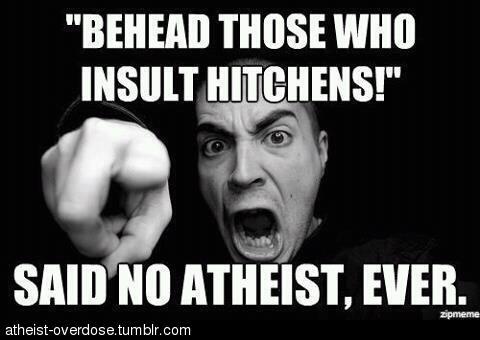
I find this troubling because Westerners think that Islamic societies are backwards compared to North America or Europe. The reaction of Westerners to the protests and the murders has been predictable: Muslims are characterised as reactionary and blinded by their religious attitudes. This is quite clear in examining news media, but it's also a trend on the internet. The two best examples of this are an article published by the Onion, and a meme comparing Islam to atheism. Both of these are offensive because they treat Muslims as immature fanatics, incapable of operating in a pluralistic world like "everyone else".
It is particularly frustrating because Westerners are not deconstructing why Muslims are angry. Few Americans, for instance, realise that residents of the Middle East don't understand American-style individualism. The protests have been vociferously anti-American, and this is primarily because Muslims living in rather collectivist undemocratic societies presume that the video was produced or disseminated in part by the United States government. And it seems to make perfect sense from the perspective of Muslims that Washington might be participating in this given the terrible suffering that Muslim populations have experienced as a direct result of American foreign policy, particularly since the end of the Cold War.
There is much more to say about this topic, but I'll leave you with a final comment. The film and its reaction have highlighted what I believe is the new Islamophobia. It's not about attacking people's religion directly, it's about attacking all the items affiliated with it (terrorism, oppression of women's rights, lack of religious freedom, dictatorships, immigration) in order to discredit the religion and its culture. I'm very worried for the future of relations between the West and Islam given the incredible tension that is produced between government and between cultures.
The most recent episode has been one of such frenzies of media attention. A low-budget production called "The Innocence of Muslims" was launched onto youtube, seen countless times by countless people around the globe. To not have heard about this controversy, you'd have to have been far removed from any media or anyone with access to media. My post this time around has to do, predominantly, with the media coverage of this event and, secondarily, with the general attitudes of the West toward Islam.
As I mentioned a second ago, 9/11 played a mammoth role in politicising Muslims as others. There has been a long history in the West of vilifying Islamic peoples and their cultures, but the climate after 9/11 brought a new perspective, with Islam threatening not Christianity, but democracy, capitalism, individualism, freedom of expression, secularism, pluralism, and other pillars of a modern Western society.
The film itself is something that I won't really comment on much. I think it's an atrociously poorly produced piece, but it's full of hate, stereotypes, and ignorance. The film, according to its producers, is designed to point out the hypocrisy of Islam and its prophet, Muhammed. The film has been viewed by hundreds of millions of people in countries all across the world. The response to it has been mixed, with many promoting the right to freedom of speech and others indicating that this is blatant hate speech. The debate is a challenging one, as striking a balance of censorship and expressive license is a major issue in most modern democratic states.
The film aside, the majority of the media coverage has centred around the rather noteworthy reactions in the Islamic world. Throughout the Middle East there have been significant protests since the middle of September. Groups of Muslims, largely urban youths, have gathered to express their anti-American sentiments, offended at the defamation of their god. These protests, which are an authentic expression of their religious fervour, have been augmented by a growing resentment in the Middle East toward American politics and culture. While the vast majority of these protests were peaceful, some protestors turned to violence, notably in Libya, where the US ambassador was murdered.
These events prompted the standard arguments. Islam is violent, or Muslims are uncivilised, or any other Islamophobic drivel. These presumptions and stereotypes are not at all new. These constructs are part of over a millennium of contact between Christianity and Islam, often marred with violence. The Islamic world is presented as brutal and savage while the Christian world is characterised as peaceful and ordered. There is a false sense of superiority on the part of Westerners that our societies are more advanced than those in the Middle East. Overwhelmingly, proponents of such a worldview are totally failing to understand Islam and are not deconstructing their privilege as Westerners.
The first part of this is not understanding Islam. Few realise that Islam is very close in content to Christianity. Because of the unfortunate history of conflict between the Christian West and the Middle East, Muslims have overwhelmingly been constructed as untrustworthy, immoral, unintelligent, foul, and aggressive. These characterisations were based on selected interactions with Muslims and ignore the significant contributions that Muslims have made to art, math, philosophy, and science.
The second element is the blatant hypocrisy. Muslims are thought to be intolerant and violent, which of course is contrasted with Western pluralism and agreeability. This is absolutely incorrect for two reasons. Firstly, it suggests that there are not high rates of intolerance and violence in Western societies. This is clearly untrue, given the amount of discrimination and aggressive crime in places such as the United States. Moreover, in the historical context it is quite evident that Christians have been terribly aggressive, such as the sectarian violence of the Thirty Years War, the persistent persecution during the Reconquista, the brutal colonisation of Africa, and the Holocaust. Secondly, it holds Muslims to the same standards as the West, where different social, economic, and political factors have produced a vastly dissimilar realities. It's forgotten all too quickly that not only have Christians committed atrocious crimes against humanity all through the twentieth century, they continue to do so now.
I find this troubling because Westerners think that Islamic societies are backwards compared to North America or Europe. The reaction of Westerners to the protests and the murders has been predictable: Muslims are characterised as reactionary and blinded by their religious attitudes. This is quite clear in examining news media, but it's also a trend on the internet. The two best examples of this are an article published by the Onion, and a meme comparing Islam to atheism. Both of these are offensive because they treat Muslims as immature fanatics, incapable of operating in a pluralistic world like "everyone else".
It is particularly frustrating because Westerners are not deconstructing why Muslims are angry. Few Americans, for instance, realise that residents of the Middle East don't understand American-style individualism. The protests have been vociferously anti-American, and this is primarily because Muslims living in rather collectivist undemocratic societies presume that the video was produced or disseminated in part by the United States government. And it seems to make perfect sense from the perspective of Muslims that Washington might be participating in this given the terrible suffering that Muslim populations have experienced as a direct result of American foreign policy, particularly since the end of the Cold War.
There is much more to say about this topic, but I'll leave you with a final comment. The film and its reaction have highlighted what I believe is the new Islamophobia. It's not about attacking people's religion directly, it's about attacking all the items affiliated with it (terrorism, oppression of women's rights, lack of religious freedom, dictatorships, immigration) in order to discredit the religion and its culture. I'm very worried for the future of relations between the West and Islam given the incredible tension that is produced between government and between cultures.
Subscribe to:
Posts (Atom)